
West Virginia Owner of Record
The current owner sits in the assessor's published parcel record. IAS labels it “Current Owner” in results and “Property Owner” on the detail card. Match the name to the parcel ID. Pair it with the mailing and physical addresses as well, so the person or entity stays tied to the right piece of West Virginia land.
| Owner Name | Current Owner in IAS results; Property Owner in the detail card. |
|---|---|
| Mailing Address | Address used for assessor or sheriff notices; it can be off-site. |
| Physical Address | The property's situs address. |
| Sale Date | A dated Sales History entry, with price, type, and codes where shown. |
| Deed Reference | Book and page or another recording reference linked to the assessment. |
Treat the sale field as an assessment clue. It is not proof of today's owner. The deed reference leads to the county clerk's record, where the grantee and legal description appear; compare that instrument when the sale date or owner name hints at a recent transfer.
IAS Owner Fields in West Virginia
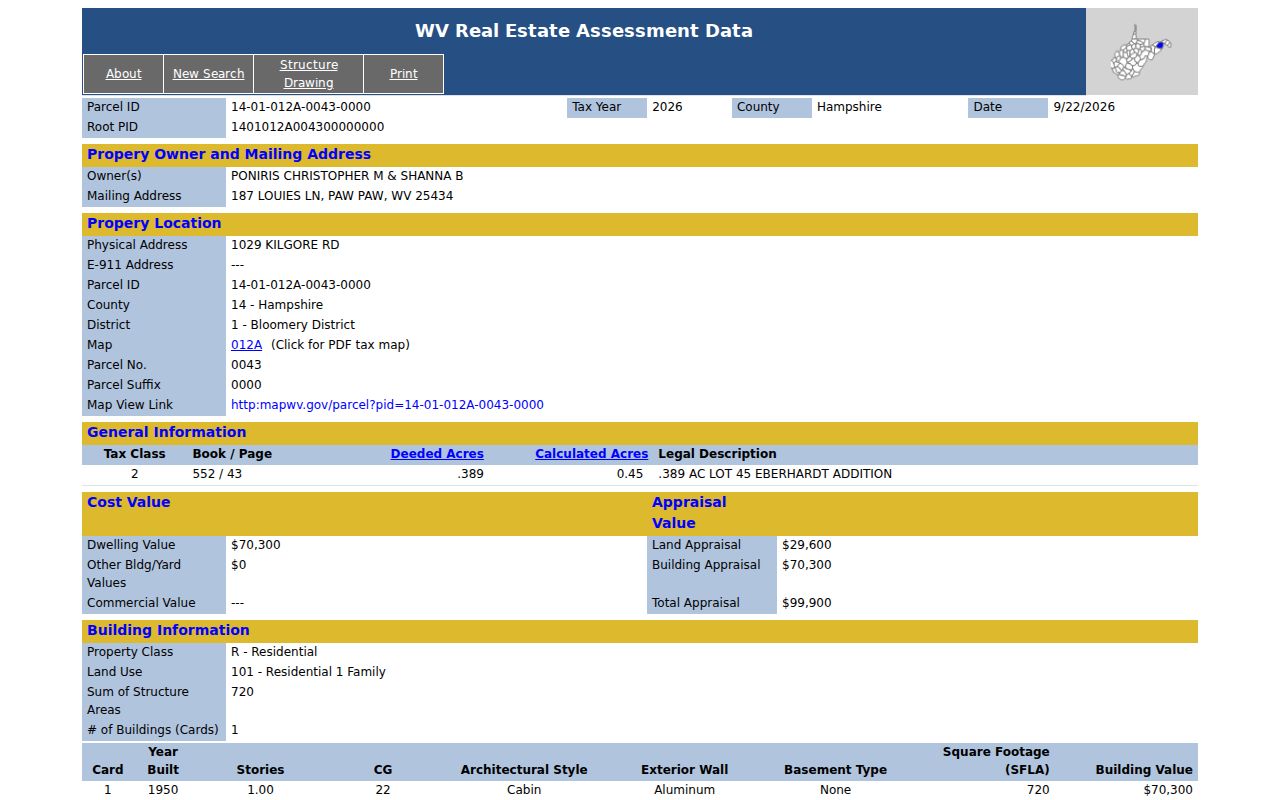
The IAS Property Search lets users pick a county. From there, search by owner, street, or full parcel ID. A result row shows the “Current Owner.” The detail card goes further, separating “Property Owner,” “Physical Address,” and the owner's own address. Open the card before trusting a name from a broad result.
The West Virginia sample parcel detail places those fields beside building information, appraisal values, Sales History, and Parcel History.
The Sales History tab can list Sale Date, Price, Sale Type, Source Code, Validity Code, Book, and Page. Parcel History works differently. It pairs tax years with the owner, mailing address, legal description, and land, building, and total amounts. Neither tab replaces the county clerk's latest deed.
A common owner name needs the full parcel ID. That keeps the name tied to the right card. The result and detail labels reflect the assessor's present owner fields. History rows run by tax year. A sale entry can point toward a recorded instrument. But it does not prove the current tax-year entry has changed.
West Virginia's Annual Owner Release
The state viewer releases assessment information annually. W. Va. Code §11-4-8 separately requires the county clerk to send a certified transfer list to the assessor by the tenth of each month and directs the assessor to make needed current-year changes. The two cycles explain why a county record can move ahead of the statewide display.
Ownership, use, and value as of July 1 generally set the next calendar tax year; public-service business property follows a different assessment date. Assessors start annual work July 1 and complete the land and personal-property books by January 30. Those dates define an assessment cycle, not a promised day for an online name refresh.
The monthly list is a statutory exchange between county offices. It does not set a public-facing refresh schedule for IAS or the Property Viewer. A recorded deed and a certified transfer entry can therefore precede the statewide owner's display, even while the county is carrying out its current-year updates.
How Current Is West Virginia's Owner Record
No statewide source promises a fixed lag between a recorded deed and an online owner-field change. A recent transfer may surface in a local assessor system before the state viewer's next annual release. The Current Owner display can lag. The county clerk's newest filing comes first. Parcel splits trail too. Map data often catches those changes even later.
When dates differ, keep both in view. The assessment record answers who the published tax roll names as owner. The latest deed names the grantee. The local assessor can explain its current book entry, and the county clerk confirms the filed instrument. Never treat the annual display as a real-time ownership claim.
Record the viewer's tax year or release context. Set it beside the deed's recording date to see which source is newer, using the clerk's newest deed for the conveyance and the assessor for the parcel entry.
- Owner of record
- The name attached to the parcel in the assessor's published record.
- Assessment roll
- The county land book and related parcel and value data.
- Situs address
- The physical location, separate from the mailing address.
- Recording lag
- The gap before a deed appears in a later assessment release; no statewide day count is promised.
West Virginia Situs and Mailing Addresses
The physical, or situs, address shows where the parcel lies. The mailing address serves a different role. It tells the assessor or sheriff where tax notices go. That address may belong to an off-site owner, an agent, a trust, a business, a P.O. box, or an approved substitute-address participant. It never proves the owner lives there.
The Property Viewer matches E-911 addresses through SAMS. Rural routes and P.O. boxes will not match. When a house number fails, IAS Street Name can help. Its address data runs incomplete at times, though. The parcel ID and legal description remain the sure way. They reconcile a candidate address with the current assessment record.
West Virginia Co-Owners and Entities
An IAS row can show a single owner while the deed lists more. Compare co-owner names and vesting in the newest deed. The deed may name an LLC or corporation. Search the exact entity name in the West Virginia Secretary of State business records. Agent and officer fields describe the filing, not title.
Trusts and estates add wrinkles. A trust may appear under a shortened name or trustee. An estate transfer may name an executor or administrator. Match the legal description and parcel ID across the party forms you try. Also match the book or page. Surface and mineral interests can carry separate cards. A row label alone rarely shows every interest in West Virginia land.
Confirming West Virginia's Current Owner
Confirm the assessment-roll name with the county clerk's newest deed. Portal years and image access vary by county. Check certified dates before treating any online search as complete.
- Search IAS by address, owner, or full parcel ID; copy the parcel number and displayed name.
- Open the detail card and compare its owner, physical and mailing addresses, legal description, and deed reference.
- Search the county clerk index for a deed that matches the legal description; compare grantee, recording date, book, and page.
- If the deed and roll differ, ask the assessor which tax-year entry it maintains.
The West Virginia deed records process explains the county index and image route. This check stops at the latest conveyance and never traces the full chain backward.
West Virginia Deed Access by County
The legacy WV County Clerk Portal now points many counties to RECORDhub, the newer system. Guest index access may be open. Images can require a subscription or a fee. Certified dates differ by county. Use the selected county's own cutoff.
Contact the county clerk for the latest deed if it is not online, or search older books at the counter. A written West Virginia FOIA request can seek an existing deed or land-book entry by parcel, office, date range, and format. The custodian need not create a new index or perform title research, and reproduction and copy fees follow the current county schedule.
Corrections to a name, situs, or parcel go to the local assessor, not the statewide search page. The West Virginia county assessor directory lists each office. Give staff the county, district, parcel ID, tax-year label, and deed reference. Staff can identify the exact entry. Ask whether it reflects the current land book. A missing or misindexed recorded instrument belongs with the county clerk. Ask what documentation supports a correction. A request alone does not change the annual statewide display.
Limits of the West Virginia Owner Field
The assessment name does not show who occupies a parcel. It also cannot replace a title search. A deed newer than the annual roll is the stronger owner evidence. Keep its date beside the tax-year label. Ask the custodian about any mismatch.
For address-to-record lookups, use the West Virginia owner-finding steps, and treat an owner lookup as a tool for lawful property research and due diligence rather than a way to locate a protected person or target anyone.
Check before relying. An owner name or mailing address does not identify who lives at the property. Do not use a record to stalk, harass, or harm another person.